The American electorate is changing rapidly. The changes are widespread and include demographics, geographic location, employment, education, religious affiliation, marital status, childbearing, and information technologies. The tools we use to understand voters in this rapidly changing environment need updating. IFPG builds the models, targeting tools and investment frameworks to develop new approaches that will reach voters and rebuild their power.
- The 17–23% of American voters who hold negative views of both parties and decide modern elections. These are the “double haters” or “double negatives” that continue to grow in terms of a percent of the electorate.
- How campaigns measure efficiency and decide resource allocation in a presidential setting, using an electoral vote strategy
- Changes in technology and audiences require the creation of new testing methodologies and new measurements of efficacy
- The identification of new strategies, tactics, and standards of success that require risk-taking and a multi-cycle time frame
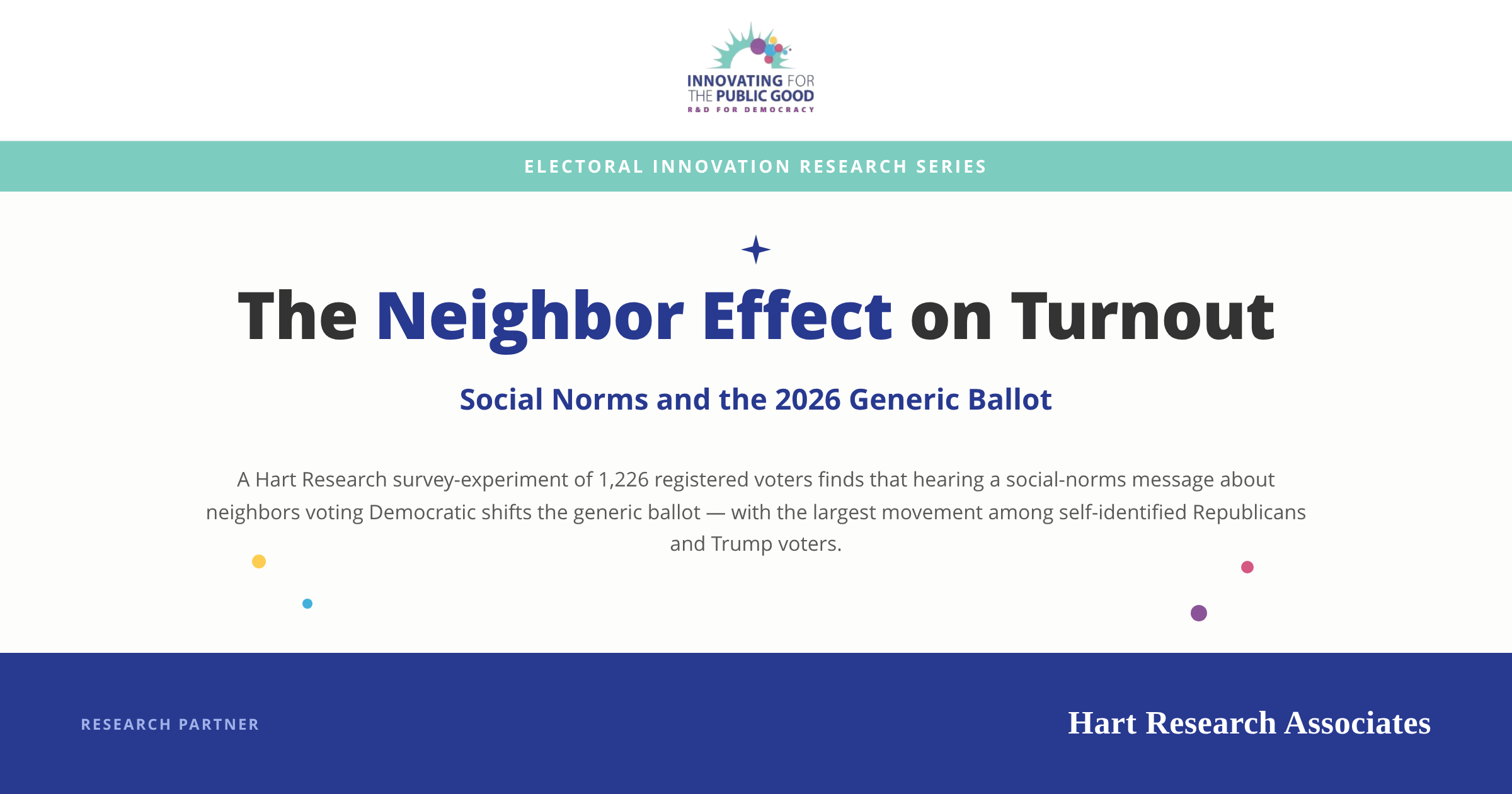
They swing late, most cycles they swing right. Until IFPG began this work, no one had built the tools to find them, talk to them, or bring them back.
IFPG was the first organization to name Double Negatives as a cohort and treat them as determinative, in 2024, in partnership with TargetSmart. This model is being updated every cycle.
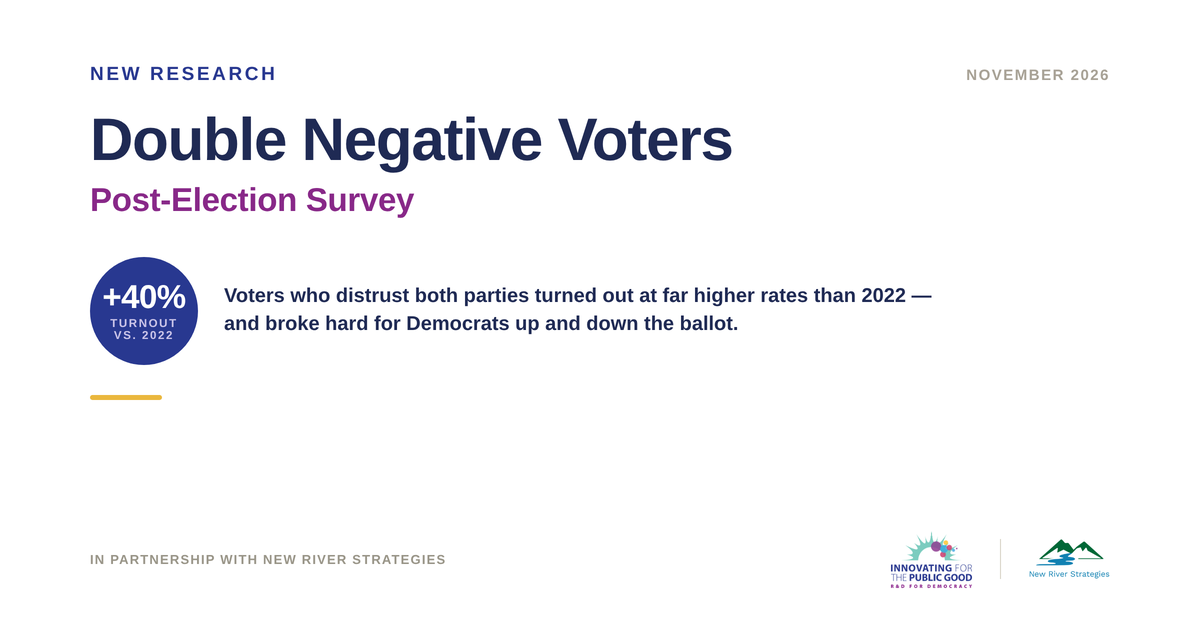
New River Strategies Post-Election Survey of Double Negative Voters Memo
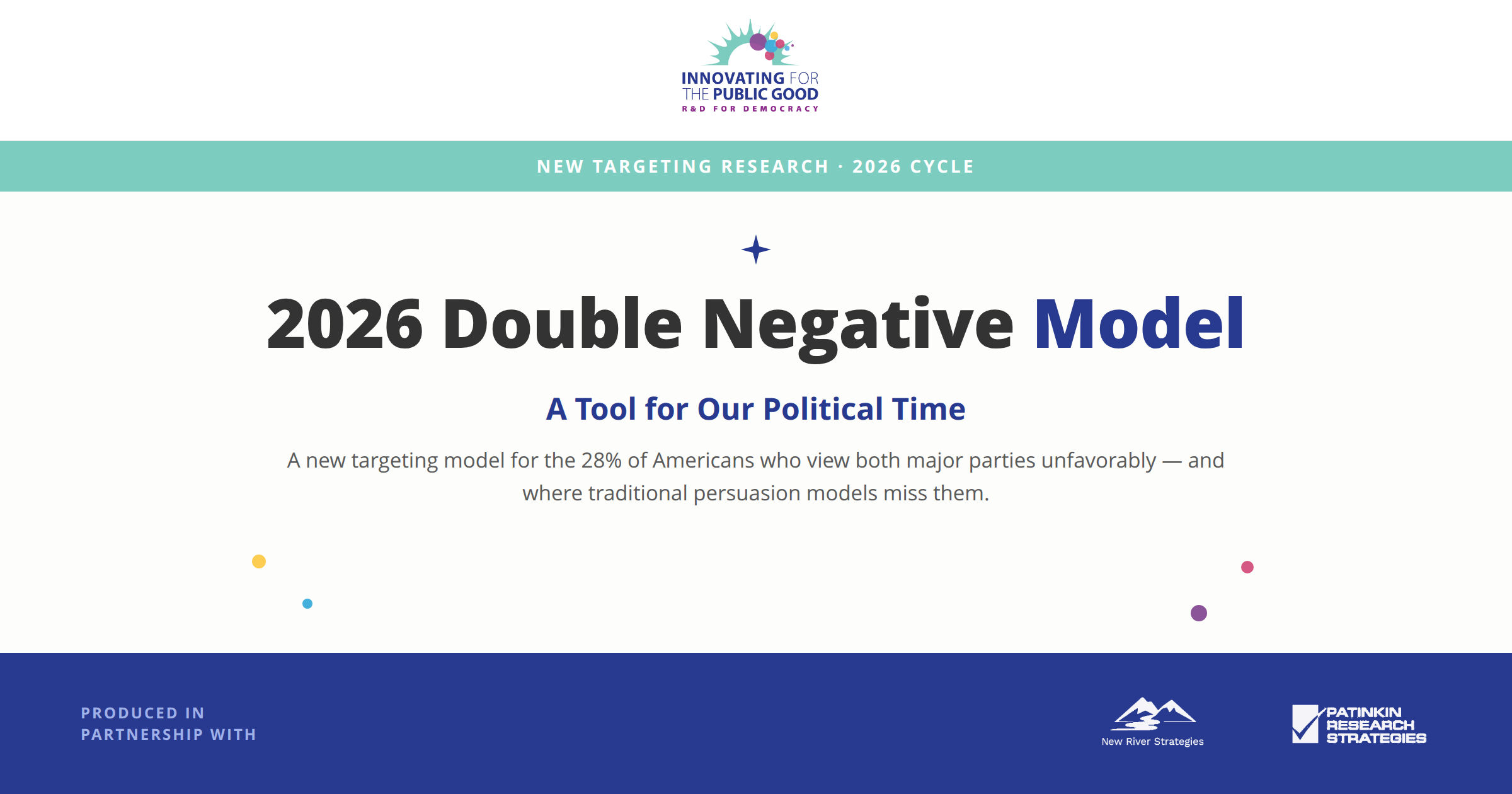
2026 Double Negative Model Release


A framework for measuring the real return on electoral spending in presidential elections, and identifying where additional investment moves votes versus where it doesn’t. Being refined with partners for the 2028 cycle.

Allocating resources in a Presidential year requires a different calculation. Presidential elections are based on electoral votes–so a cost per net vote is not a useful measure in that context. IFPG built the first CPEV model in 2024 and is planning to reprise and improve the model for 2028.